Markus Min
Powering population models with an AI workflow to turn underwater video into conservation insights
Abstract
A core conservation challenge for many species is the lack of data on population demographics and abundance. Traditional survey methods are expensive and require technical expertise to implement, which leads to significant gaps in population monitoring - especially in under-resourced communities. This presents both a conservation and an equity challenge, and underscores the need for new, low-cost data streams.
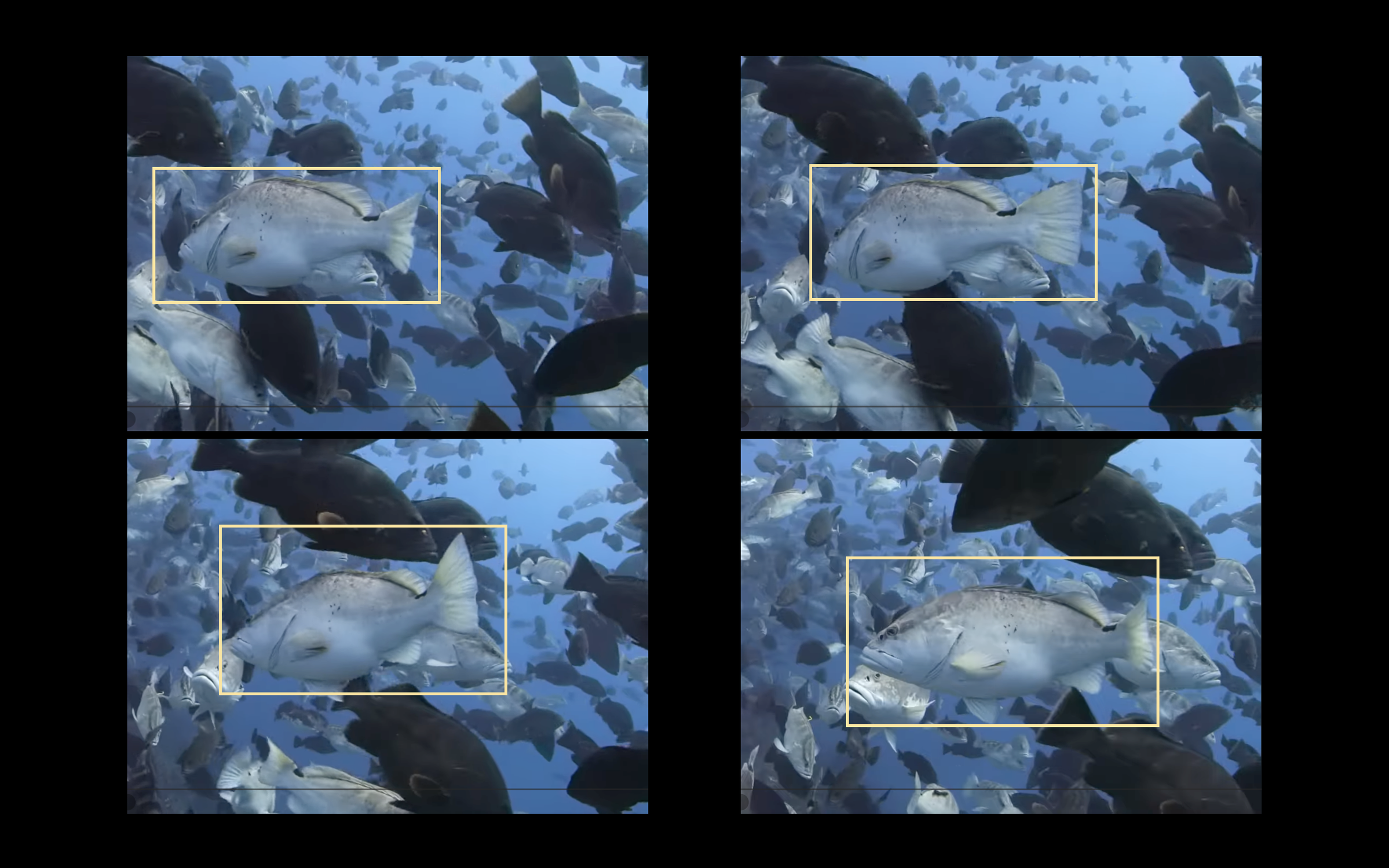
This challenge is exemplified by the critically endangered Nassau Grouper in the U.S. Virgin Islands, whose recovery is hampered by data limitations. Underwater video collected by divers for the last two decades presents a low-cost and non-extractive method of monitoring this population, but remains underutilized. In this project, we will use computer vision and pattern recognition algorithms to transform this underwater video into conservation data. Specifically, by leveraging the stripe patterns that are unique to each individual Nassau Grouper, we will develop facial recognition algorithms to generate mark-resight datasets from underwater video and a population model that turns this data into key metrics including population size and survival.
By collaborating with NOAA Fisheries, we will use these methods to develop the first population model for Nassau Grouper in the U.S. Caribbean to inform population monitoring and recovery. Ultimately, by developing these methods and packaging them in a reproducible workflow, we seek to produce a toolkit that can be used to turn video into robust conservation insights for populations around the world.
Mentors
Brice Semmens at University of California, San Diego, Orian Tzadik at NOAA Fisheries and Rick Nemeth at University of the Virgin Islands
Undergraduate Education
B.S., Marine Biology, University of California, Los Angeles, 2019
Graduate Education
Ph.D. School of Aquatic and Fishery Sciences, University of Washington, 2026
Connect with Me
I welcome inquiries from prospective applicants at my personal email (markus.min@gmail.com)