Tessa Rhinehart
Using novel acoustic mark-recapture techniques to guide ecosystem-scale forest restoration and species conservation
Abstract
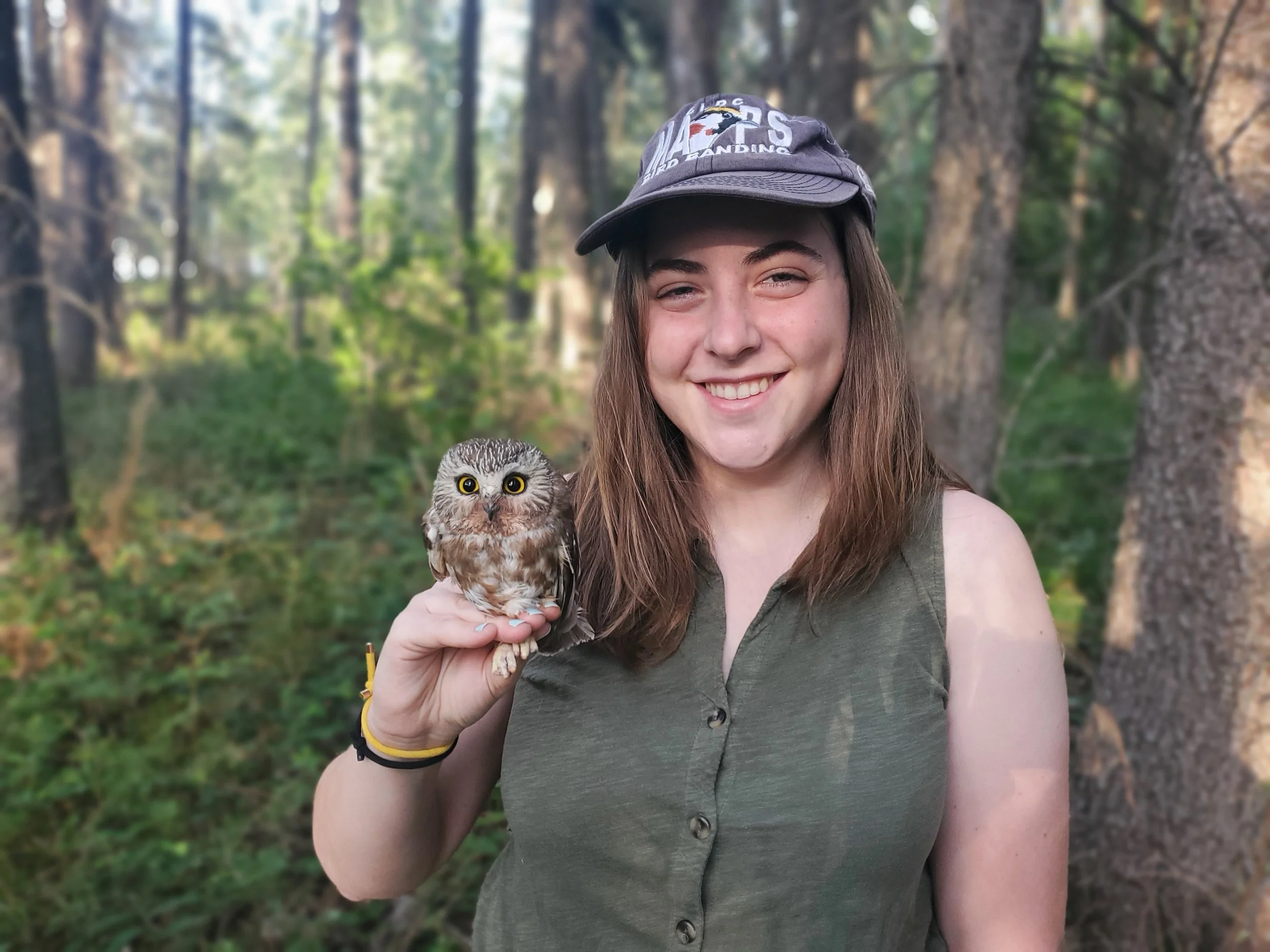
Forests of the Sierra Nevada are changing rapidly due to more frequent, intense wildfires and prolonged drought. To reduce the risk of catastrophic fires that threaten forests, communities, and watersheds, forest managers thin dense vegetation and apply prescribed burns. However, implementation of this management has been delayed because its impacts on sensitive animal populations are poorly understood. The Sierra Nevada hosts a large-scale animal monitoring program, with thousands of sound recorders deployed to detect where bird species are present or absent. But current presence/absence-based monitoring techniques require species to go locally extinct–or colonize new areas–for scientists to sense population-level responses to disturbances. Because such changes can take years or decades to observe, managers need a faster method of assessing animals’ responses to these disturbances.
To accelerate insights about how disturbances impact wildlife, my project implements an “acoustic mark-recapture” technique to track individual animals’ fates. This method relies on the fact that many species have individually identifiable voices, allowing us to “mark” an individual animal and track whether we “recapture” its sound year after year. I will develop algorithms to recognize individual voices in several indicator bird species and apply these techniques across over 1,500 sites in the Sierra Nevada to estimate species abundance and individual annual survival rate. By comparing these estimates to detailed data about fire, drought, and management at each site, we will identify the conditions under which bird populations thrive or decline. This will enable managers to more rapidly incorporate scientific findings into management planning, ultimately supporting management that both reduces wildfire risk and conserves wildlife populations in the Sierra Nevada.
Mentors
Connor Wood at Cornell Laboratory of Ornithology, Craig Thompson and Sara Sawyer at U.S. Forest Service
Undergraduate Education
B.A., Biology, Mathematics, Swarthmore College, 2017
Graduate Education
Ph.D. Biological Sciences | University of Pittsburgh, 2026
Connect with Me
Please feel free to reach out by email (tessa.rhinehart at pitt.edu) if you have questions about applying for the Smith Fellowship!