

Meet the
Smith Fellows
Since its inception in 1999, the David H. Smith Conservation Research Fellowship Program has supported more than 120 early-career scientists from around the world. These fellows have gone on to make significant contributions to the field of conservation science.


Current Fellows



All Fellows
Browse by Class
- Class of 1999 7
- Class of 2000 5
- Class of 2001 5
- Class of 2002 6
- Class of 2003 6
- Class of 2004 5
- Class of 2006 4
- Class of 2007 4
- Class of 2008 4
- Class of 2009 4
- Class of 2010 4
- Class of 2011 4
- Class of 2012 4
- Class of 2013 4
- Class of 2014 4
- Class of 2015 5
- Class of 2016 5
- Class of 2017 5
- Class of 2018 5
- Class of 2019 5
- Class of 2020 5
- Class of 2021 5
- Class of 2022 5
- Class of 2023 5
- Class of 2024 5
- Class of 2025 5
- Class of 2026 7

Julia Baum
Sharks on coral reefs: estimating baseline abundances and ecosystem consequences for their elimination


Katherine Smith
Forecasting infectious disease emergence resulting from the global trade in wildlife

Tania Schoennagel
Fire risk and forest restoration in the wildland-urban interface of the Colorado Front Range

Robert McDonald
Urbanization and conservation priority setting: nature-based solutions; ecosystem-based adaptation.

Myra Finkelstein
Understanding the effects of interacting threats on the survival of long-lived species
Brian Silliman
Top-down vs bottom up control of salt marsh die off in the southeastern US.

Julian Olden
Conservation planning and prioritization for invasive species: forecasting invasions and their impacts in freshwater systems using process-based modeling.

Cara Nelson
Evaluating prescribed fire as a tool for forest restoration: implications for old-growth ponderosa pine mortality and vigor."
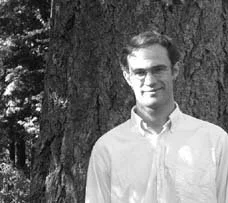
Joshua Lawler
Climate Change and Biodiversity: Assessing Conservation Planning Approaches in a Changing Climate

Jacqualine Grant
Landscape approaches to preserving genetic diversity in fragmented habitats

Patricia Zaradic
Determining conservation thresholds in freshwater ecosystems: modeling mechanistic relationships using a spatially explicit artificial neural net


Martin Schlaepfer
Novel selective environments for indigenous species as a result of biological invasions

Jim Mannolis
Integrating Biodiversity and Timber Management in Forest Landscapes Using Spatially Explicit Forest Models

Benjamin Halpern
Predicting community-level responses to marine reserve protection: understanding the causes of food web stability

Juliann Aukema
Identifying priority areas for conservation in complex tropical regions: Within-island patterns of species richness and endemism in Puerto Rico

Caroline Christian
Fire disturbance and plant invasion: consequences of fire variability, life history diversity and grazing for plant communities

Helen E. Fox
Marine Conservation by Design: Evaluating Networks of Marine Protected Areas in Hawaii

J. Cully Nordby
Impacts of an invasive cordgrass (Spartina alterniflora) on avian communities in San Francisco Bay salt marshes: implications for the management of exotic species

“The Smith Fellowship was both an incredible experience at the time, providing excellent research support, training, and professional development opportunities, and an amazing network to be a part of in the decades that have followed!”
Building a network of change makers
Smith fellows have made significant contributions to the field of conservation science, including developing innovative solutions to critical conservation challenges, publishing groundbreaking research, and informing conservation policy and practice. Learn more about joining the program today!
